Sondo - AI Music Video & AI MV
- 3.5
- Rating
- 1.00M
- Installs
- Free
- Price

 Analysis by App-foxy
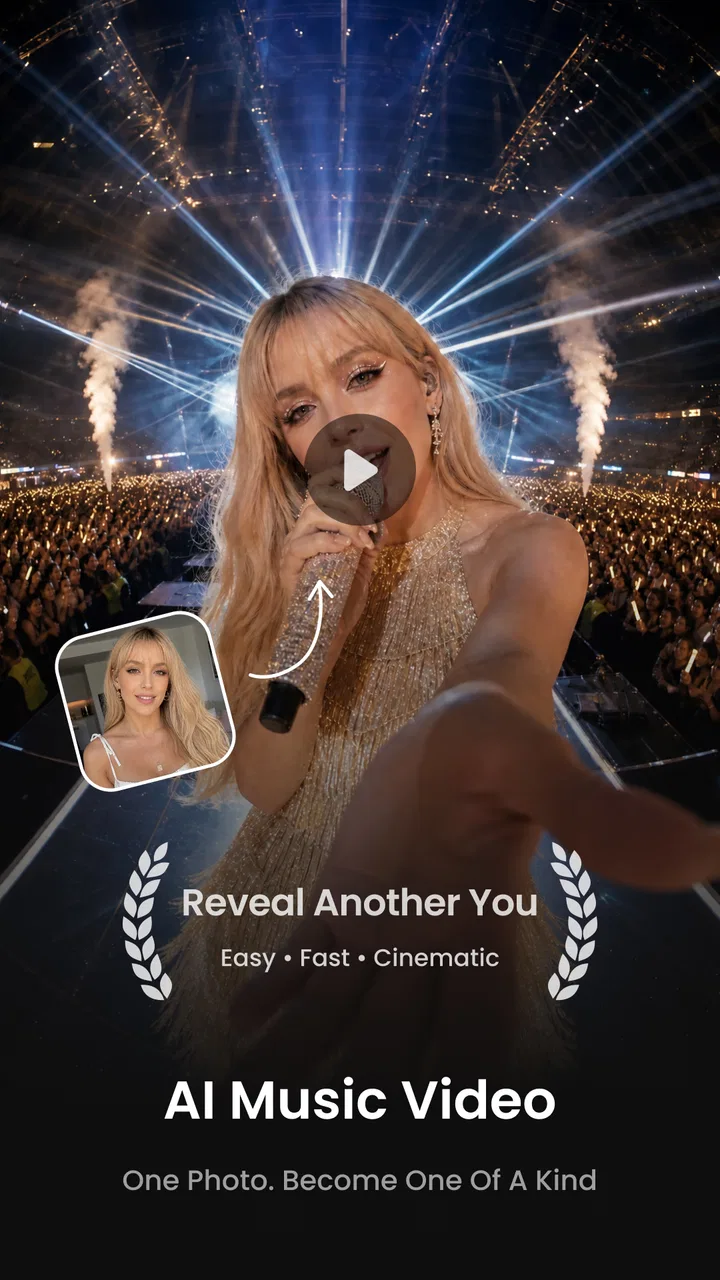
I approached Sondo - AI Music Video & AI MV as someone looking for a quick way to turn an idea for a song or visual concept into something shareable. It sits in the Music & Audio category, but it is more interesting than a conventional player or music library because its focus is creating AI-assisted music and music videos. That makes it appealing to people who want to experiment without opening a full desktop production suite.
My first impression was that Sondo is best understood as an idea-to-result tool rather than a replacement for a complete recording studio. You bring a concept, a mood, or a rough creative direction, and the app helps turn that starting point into an audiovisual piece. The experience is most rewarding when I treat the result as a draft, a creative sketch, or a finished social post—not as a substitute for detailed mixing, mastering, or professional video editing.
It is a free app from TUNESPHERE, with optional purchases ranging from $4.99 to $59.99 per item. The Everyone age rating makes it approachable for a broad audience, while the current version, 2.1.3, is designed for devices running Android 8.1 or later. Its average rating is 4.3 from around 6,200 ratings, and the app has passed 100,000 installs, so it has already attracted a meaningful audience without feeling like an established mainstream audio workstation.
You May Also Like

 Blood Strike: 2.5 Anniversary
Blood Strike’s Loadouts Turn Every Drop Into a Tactical Gamble
A close look at Blood Strike’s custom loadouts: how fast access to signature weapons reshapes its battle royale rhythm, rewards preparation, and narrows the gap between fights.

 Pandora - Music & Podcasts
Pandora’s Music Is Easy to Start, but Harder to Recover
Pandora’s strength is its low-effort path from a seed to a station. Its weak spot is how much confidence it asks you to place in connection, setup, and quiet recovery.

 8 Ball Pool
 Is Built on Rivalries, Rematches, and Routine
A close look at the rivalries, rematches, shared routines, and unanswered safety questions that turn a quick pool match into a persistent mobile community.

 Samsung Music
’s Quiet Strength Is Playing What You Already Own
Its reach comes less from spectacle than from dependable access to a personal library. That simplicity is both the app’s strongest retention engine and its ceiling.

 AccuWeather: Weather Radar
AccuWeather Review: A Quick, Clear Forecast for Everyday Decisions
For everyday plans, the best forecast is the one you can understand quickly. AccuWeather makes rain timing, radar, and local conditions easy to act on, with a few trade-offs.

 Hill Climb Racing
Why Hill Climb Racing Still Turns Crashes Into One More Run
A tiny car, a bumpy hill and one more upgrade: Hill Climb Racing keeps resurfacing because its simple chaos makes every near-miss feel personal.
More From Our News Desk
View All News


Where the experience usually gets stuck
The first difficulty is not necessarily the creative part. It is understanding what kind of result the app is meant to produce. Someone expecting the precise controls of a digital audio workstation may feel limited, while someone wanting a fast way to explore a chorus, theme, or visual mood will probably feel more at home. I found that having a clear, modest goal before starting makes the process much smoother.
A vague request such as “make something cool” leaves too much room for an unpredictable result. A better approach is to decide on the emotional direction first: calm, dramatic, playful, tense, or energetic. Then I think about the visual setting and the intended audience. Even a short internal brief—“a bright electronic idea for a travel clip” or “a dark cinematic background for a short story”—gives the creative process more focus.
Another common sticking point is expecting the first generation to be the final version. AI-assisted creation works better when I judge the first output as a starting point. If the musical character is close but the imagery feels wrong, I change the visual direction rather than abandoning the whole attempt. If the atmosphere works but the arrangement does not, I keep the useful idea and revise the musical request. This separation of problems saves time.
There is also a practical difference between making something for personal enjoyment and making something that needs to represent a brand, artist, or business. For a casual post, an unusual transition or imperfect musical phrase can add personality. For a professional release, those same irregularities may need manual correction in another application. Sondo is strongest at speed and experimentation, not at guaranteeing the exact repeatable result a client brief may require.
Why the first attempt may feel less successful than expected
When a generated piece feels generic, I do not immediately blame the app. The input may simply be too broad. I get more useful results by describing contrast and purpose instead of listing many unrelated adjectives. For example, choosing one main mood and one visual setting is usually clearer than combining several genres, locations, tempos, and cinematic references at once.
Lengthy instructions can also become counterproductive if they bury the central idea. I prefer a compact creative direction, then refine it in stages. This creates a more understandable comparison between attempts. If I change everything at once, I cannot tell whether the improvement came from the musical idea, the visual concept, or a random variation in the generation.
A further trade-off is originality versus predictability. A familiar concept may produce an immediately understandable result, while a more unusual prompt can create something distinctive but uneven. I would use the safer direction when I need a background for a presentation or a simple social update. I would accept more experimentation when the goal is brainstorming or discovering a new style.
Setup checks that prevent avoidable frustration
Before starting, I check the operating system because the app requires Android 8.1 or later. That is a simple detail, but it matters on older phones and tablets. I also make sure the device has enough free space for the creative process and any saved results. I do not treat a compatible operating system as a guarantee of a smooth session; available storage and general device condition can matter just as much.
A stable internet connection is another sensible preparation step for an AI-focused app. If a creation appears to stall, I first check whether other online services are working on the same device. Switching between a weak mobile signal and a reliable Wi-Fi connection can make the difference between a clean attempt and a confusing wait. I avoid repeatedly pressing the creation control while a request may still be processing, because that can make it harder to identify which result belongs to which attempt.
I also recommend preparing the source idea outside the app for a moment. I write down the intended mood, the subject of the video, and where I expect to use the result. This small habit is more valuable than it sounds. It prevents me from changing direction halfway through and gives me a useful standard for judging the output.
Because the app is free to install but includes optional purchases, I would also decide in advance whether I am only exploring the no-cost experience or whether I am comfortable paying for additional access. The listed purchase range is broad, from $4.99 to $59.99 per item, so I would read each purchase screen carefully before confirming anything. I would not assume that paying automatically solves a creative problem; a weak concept still needs a better concept.
A sensible first-session routine
My preferred first session is deliberately small. I start with one uncomplicated idea, create a result, and inspect both the music and the visuals separately. I ask three questions: does the mood match, is the pacing usable, and would I actually show this to someone? Those questions are more useful than judging the result only by whether it looks technically impressive.
For a short social clip, I pay attention to the opening because viewers may decide quickly whether to continue watching. For a background piece, I care more about whether the visual movement competes with the subject. For a personal experiment, I am more forgiving of surprises. This context-based evaluation helps me avoid rejecting a good result simply because it is not suitable for the use case I imagined afterward.
I would not begin by trying to recreate a famous song or a highly specific artist identity. Apart from the creative limitations of imitation, that approach gives me a narrow target and makes small differences feel like failures. Sondo is more enjoyable when I describe the qualities I want—such as a warm vocal mood, a tense electronic texture, or a dreamy visual atmosphere—rather than demanding an exact copy of something familiar.
Recovering a workflow when a result goes wrong
When a generation does not appear, I use a simple recovery sequence. First, I check the connection and wait briefly rather than submitting the same request repeatedly. Next, I close and reopen the app if the interface seems unresponsive. If the issue continues, I restart the device and try a smaller, clearer project. These are ordinary steps, but they help distinguish a temporary session problem from a creative prompt problem.
If the result is present but not what I wanted, I change only one major element at a time. I might keep the musical direction and revise the visual setting, or preserve the visuals while simplifying the musical mood. This is one of the most useful workflows I found because it turns trial and error into a controlled comparison. Without that discipline, several changes can create a new result without teaching me anything.
I also keep a short record of ideas that almost worked. A phrase that produces an excellent atmosphere but a weak rhythm may still be useful later. I can reuse the underlying concept in a different context instead of starting from zero. This is especially helpful for creators making a series of related clips, because consistency often comes from repeating a clear creative principle rather than forcing every result to be identical.
Another practical recovery method is to separate the app’s output from the finishing stage. If I like the generated idea but need cleaner timing, captions, trimming, or a more precise arrangement, I move to a conventional editor afterward. That is not a failure of Sondo. It is a realistic division of labor: use the AI tool for rapid creation and an established editor for exact polishing.
When waiting or retrying is not the real solution
Sometimes repeated attempts produce different results but do not fix the underlying issue. In that situation, I revisit the brief. A request may contain conflicting instructions, such as asking for a peaceful mood while also demanding aggressive energy. The app may be responding to both directions, creating an output that feels confused. Simplifying the request is often more effective than generating again and again.
I also check whether my expectations match the format. A generated music video can communicate an atmosphere without telling a detailed story. If I need a precise sequence of events, character continuity, or carefully timed edits, I would plan to use another video tool for the final construction. Sondo can provide valuable raw material, but it should not be judged as though it were a complete manual production environment.
For music, I listen with headphones when possible, but I also check the result through the phone speaker. A piece that feels balanced on headphones may not translate equally well to a small speaker. This is a general listening habit, yet it is particularly useful here because the app encourages quick sharing. I want to know how the finished idea will sound in the ordinary conditions where friends or followers are likely to encounter it.
When the app is not the cause
A failed export, slow response, or missing result can be caused by the device, the connection, or the surrounding workflow rather than by the creative engine itself. I look for patterns: does every online app struggle, does the problem happen only with one project, or does it disappear after restarting? Pattern checking prevents me from treating every inconvenience as a permanent flaw in Sondo.
Device age can also affect the experience. Although Android 8.1 is the minimum operating system, newer hardware may handle modern app sessions more comfortably than an older phone with limited free space or many background processes. Closing unused apps and keeping the device reasonably clear is a sensible first step before deciding that the application is unsuitable.
There is a human factor too. If I keep changing the direction after every preview, I can create a moving target and conclude that nothing works. I get better results by deciding what matters most before I begin. Is the priority the melody, the atmosphere, the visual theme, or the speed of making something shareable? The answer determines which imperfections I can accept.
I would also be cautious about using generated material in situations that demand strict control over rights, identity, or brand consistency. The app is attractive for personal creativity and exploratory content, but a professional workflow may require additional review before publication. I would inspect every result, remove anything unsuitable, and use a separate approval process when other people or commercial projects are involved.
Who will enjoy it, and who should choose something else
Sondo is a good fit for a beginner who wants to explore music and video creation without learning a large collection of technical controls first. It is also useful for a social creator who needs a quick visual idea, a songwriter looking for a mood board, or a hobbyist who enjoys discovering unexpected combinations of sound and imagery.
I think it can be especially useful during the earliest stage of a project. Instead of spending an hour imagining how a concept might feel, I can create a rough audiovisual reference and use it to decide whether the idea deserves more work. That makes it a practical brainstorming companion, even when the final result will be completed elsewhere.
I would skip it if my main goal is detailed audio engineering, exact note editing, multitrack recording, or frame-by-frame video control. A traditional digital audio workstation is better for precise arrangement and mixing. A dedicated video editor is better for controlled cuts, captions, color adjustments, and repeatable timelines. A streaming music app is better if I simply want to listen rather than create.
The comparison is therefore not about declaring one category superior. Sondo trades fine control for accessibility and speed. Conventional tools demand more learning but give me a clearer grip on every decision. If I want a polished, repeatable production, I would combine them: generate an initial direction in Sondo, then refine the selected material with tools designed for manual editing.
My practical verdict after using it
I see Sondo as a friendly creative launchpad rather than an all-purpose studio. Its strongest quality is the way it lowers the barrier between a vague musical idea and a tangible audiovisual draft. The app becomes more rewarding when I use short, focused directions, judge each result against a specific purpose, and accept that refinement may happen outside the app.
The free entry point makes it easy to try, while the optional purchases mean I would pay attention during any upgrade decision. The broad purchase range makes it particularly important to understand what I am selecting before confirming. I would start with a small personal project and decide whether the workflow genuinely saves me time before spending money.
My most useful advice is to treat every attempt as an experiment with one clear variable. Keep the mood, change the setting. Keep the setting, simplify the music. Save the promising ideas, and do not confuse an imperfect first result with a useless tool. That approach reveals the app’s real value much faster than random retries.
With an Everyone rating, support for Android 8.1 and later, and a growing audience, Sondo is accessible enough for casual creators while still offering room for more deliberate experimentation. I would recommend it to anyone who wants to turn a concept into music and visuals quickly, especially when inspiration matters more than technical precision.
I would not recommend relying on it alone for a tightly controlled commercial production or a detailed studio workflow. For those jobs, the usual specialist alternatives remain stronger. But for a quick creative sketch, a mood-driven clip, or a way to discover an idea I could not easily describe, Sondo earns a place in my toolkit. The best results come from using it as the beginning of a creative process, not pretending it is the entire process.
FAQs for Sondo - AI Music Video & AI MV
01What is Sondo - AI Music Video & AI MV used for?
Sondo is an innovative app designed to help users create AI-generated music videos. By leveraging artificial intelligence, it allows users to combine their favorite tunes with dynamic video effects. Whether you're a casual creator or a seasoned artist, Sondo offers tools to enhance your creative projects with ease and flair.
02How does the AI feature work in Sondo?
Sondo's AI feature analyzes audio tracks to synchronize visuals with the music. The app uses algorithms to generate video effects that match the tempo, mood, and style of the selected song. This seamless integration ensures that every music video you create is visually captivating and in harmony with the audio.
03Is Sondo user-friendly for beginners?
Yes, Sondo is designed with an intuitive interface that is accessible for users of all experience levels. Beginners can easily navigate through its features, from selecting music tracks to applying video effects. The app provides guidance and tips, ensuring that even those new to video editing can produce professional-looking results.
04What are the device requirements for Sondo?
Sondo is available for both Android and iOS devices. It requires a relatively recent operating system to function optimally—Android 8.0 or later and iOS 12.0 or later. Additionally, a device with a decent amount of RAM and storage is recommended for smooth performance and to handle video processing effectively.
05Does Sondo offer any in-app purchases or subscriptions?
Yes, while Sondo offers a range of free features, it also includes in-app purchases and subscription options. These may provide access to premium video effects, additional music tracks, and enhanced editing tools. Users can choose to upgrade for a more comprehensive experience, depending on their creative needs and preferences.
Pros
- User-friendly interface with intuitive navigation.
- Wide range of AI-generated music options.
- High-quality video rendering capabilities.
- Regular updates with new features.
- Integrates well with social media platforms.
Cons
- Limited free features; premium needed for full access.
- Occasional bugs during video rendering.
- Requires a stable internet connection.
- High battery consumption during use.
- Some AI music options lack customization.

Sondo - AI Music Video & AI MV
Gallery